Adult colouring for beginners: the best colouring pages for stress relief
Updated 2026-10-15
Adult colouring is one of the easiest hobbies to start: a printed page, a few pencils and ten quiet minutes. But not every page feels relaxing. Some are so detailed that they feel like homework. This guide shows you which pages to pick when you are new, what to colour with, and how to make it a small daily habit.
Why colouring feels calming
Colouring gives your hands a simple job and your mind one small decision at a time: which colour goes here? There is no blank page to fill and no wrong answer. Many people use it the way others use a short walk, as a break from screens and to-do lists. It will not fix a stressful week, but it is a gentle way to slow down for a few minutes, and you end up with something pretty.
What makes a good colouring page for stress relief
When you are choosing pages, look for these four things.
- Bold, clean outlines. Thick lines are easier to stay inside, so you relax instead of concentrating hard.
- Medium detail. Enough small shapes to be interesting, but not so many that one page takes five evenings.
- Calm, familiar scenes. Cozy kitchens, bookshelves, flower shops, cottages and gardens feel restful. Busy crowds or dense geometric grids can feel tiring when you are new.
- White space around the art. A clear border makes the page feel tidy and gives your hand somewhere to rest.
Best types of pages to start with
1. Cozy scenes and interiors
Little rooms, window shelves, tea corners and shop fronts are the most beginner-friendly. Shapes are big, and you can finish one in a single sitting. Our Cozy Little Moments book has 60 pages like this, and Cozy Cottage Interiors uses extra-bold lines that suit markers.
2. Simple florals
Flowers are forgiving: any colour looks natural. Start with single blooms or bouquets before moving on to full botanical patterns like the Botanical Garden book.
3. Houses and villages
Fairy houses and countryside scenes mix big shapes (walls, roofs, sky) with small details (windows, flowers), so you can choose how much effort to put in.
4. Mandalas and geometric patterns (later)
Repeating patterns are very soothing once you have a rhythm, but intricate ones can be slow. Try one with larger sections first.
What to colour with
- Coloured pencils: the best all-rounder. Easy to control and blend, and they never bleed through paper. A 24-pencil set is plenty.
- Brush pens and markers: bright and fast, good for bold-line pages. Put a spare sheet under your page in case the ink soaks through.
- Gel pens: fun for tiny details and highlights, like dots on a teacup.
- Crayons: fine for relaxed colouring with kids, though harder to use on small areas.
An easy colour palette for beginners
Choosing colours is the part most beginners worry about. Make it simple: pick three main colours and one accent before you start. For example, soft pink, mint and butter yellow with a navy accent. Use the main colours for big areas and the accent for small details. Pastel palettes almost always look good together, which is why so many cozy colouring books use them.
- Cottage pastel: blush pink, sage green, cream yellow, accent brown.
- Seaside: sky blue, sand, white, accent coral.
- Autumn café: mustard, rust orange, olive, accent dark brown.
A 10-minute colouring routine
- Put your phone on silent and face down.
- Make a cup of tea or chai.
- Pick one small area of the page, like a single shelf or one flower.
- Colour just that part. Stop when the timer ends, even if the page is not finished.
- Come back tomorrow. A page finished over three evenings is still a finished page.
Short sessions keep it a pleasure instead of a project. Many people colour before bed instead of scrolling.
Simple techniques that make pages look better
- Light pressure first. Colour lightly, then add a second layer. It looks smoother and lets you fix mistakes.
- Colour in one direction. Small strokes in the same direction avoid a scribbled look.
- Add a shadow. Go over one side of each object with a slightly darker shade. It instantly adds depth.
- Leave a few spots white. A small white patch on a teapot or a window reads as shine.
Printable or printed book?
A printable PDF has one big advantage: you can print a page again if you want to try different colours, and print copies for a friend, your mum or your kids. You also choose your own paper, which matters if you use markers. Our guide on how to print colouring pages at home covers paper and printer settings.
Where to start
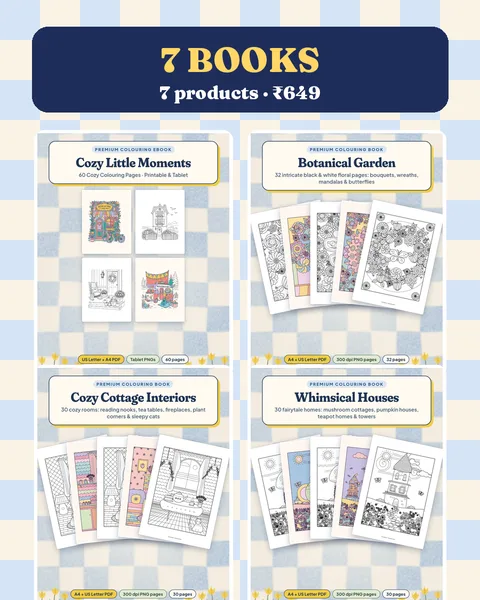
If you are brand new, start with one cozy book and a basic pencil set. If you already know you love it, the Complete Colouring Collection has all seven of our books in one download.
Questions
Is adult colouring good for stress?
Many people find it calming because it keeps your hands busy and your attention on one small, low-pressure task. It is a relaxing hobby, not a medical treatment, so speak to a doctor if stress or anxiety is affecting your daily life.
What should a beginner colour first?
Start with bold, medium-detail pages such as cozy rooms, shop fronts or simple florals. Large shapes are quicker to finish, which feels rewarding. Save very intricate mandalas for later.
Do I need expensive pencils?
No. A basic set of 24 coloured pencils or a pack of brush pens is enough to start. Add better pencils later if you enjoy it.
Can I colour printable pages on a tablet?
Yes. Import the PNG or PDF pages into an app like Procreate, ibis Paint or a colouring app and use the fill and brush tools.
Products in this guide
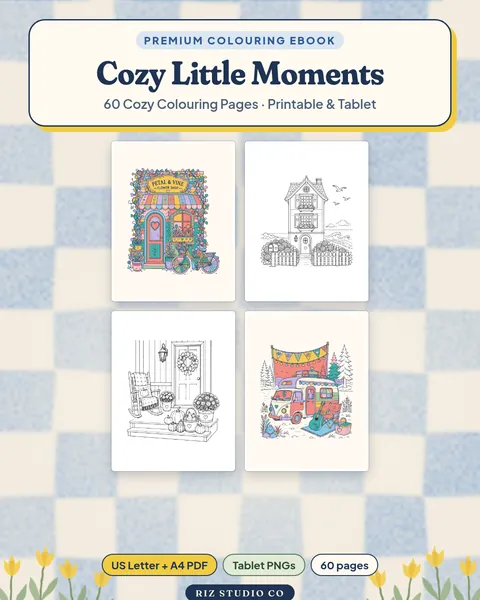
Cozy Little Moments: 60 Cozy Colouring Pages
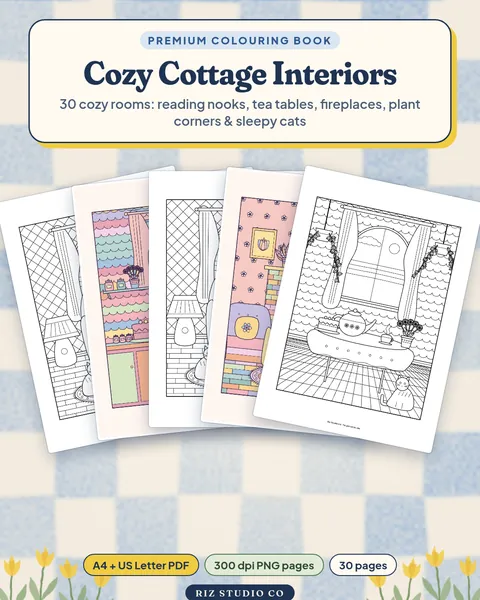
Cozy Cottage Interiors Colouring Book: 30 Cozy Room Scenes
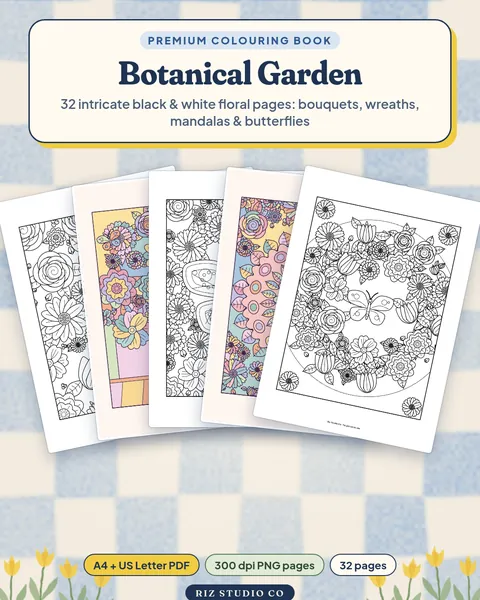
Botanical Garden Colouring Book: 32 Intricate Floral Pages